How to Become Post-Bureaucratic
Conor Healy
Past a certain size, organizations force people to behave like code: obedience over originality, rigid roles, endless rules, generic compliance training, and indifference to real growth. You leave your creativity and initiative at the door. Bureaucracy punishes what makes us great and, for the organization, everything becomes expensive and slow.
By treating people as broken, we are breaking our institutions and ourselves. 64% of workers worldwide are not engaged. With billions checked out, unattached, or "quiet quitting," the problem is the workplace, not the workers. Last year that cost the global economy $10 trillion, or 9% of GDP.
AI Can End Bureaucracy, Or Reinforce It
The rise of LLMs is an unprecedented opportunity for a cure. No rulebook or pre-AI software could handle the infinite scenarios large groups create. With technology that can solve for endless unique scenarios, we can genuinely innovate in how we channel the chaotic energy of large groups for common achievement.
This wave of innovation is also perilous. Since the 1980s, the share of middle managers has doubled alongside accelerating B2B innovation. AI is delivering valuable solutions across a range of workflows, yet failing to disrupt the space between and above them. Many leading voices in AI describe a future right out of bureaucracy's script for solving the ossification it causes: mass redundancy, centralized control, consultants, and people at the periphery. Just like previous waves of innovation, many are feeding a broken system.
Collaborative AI
The cure is collaborative AI.
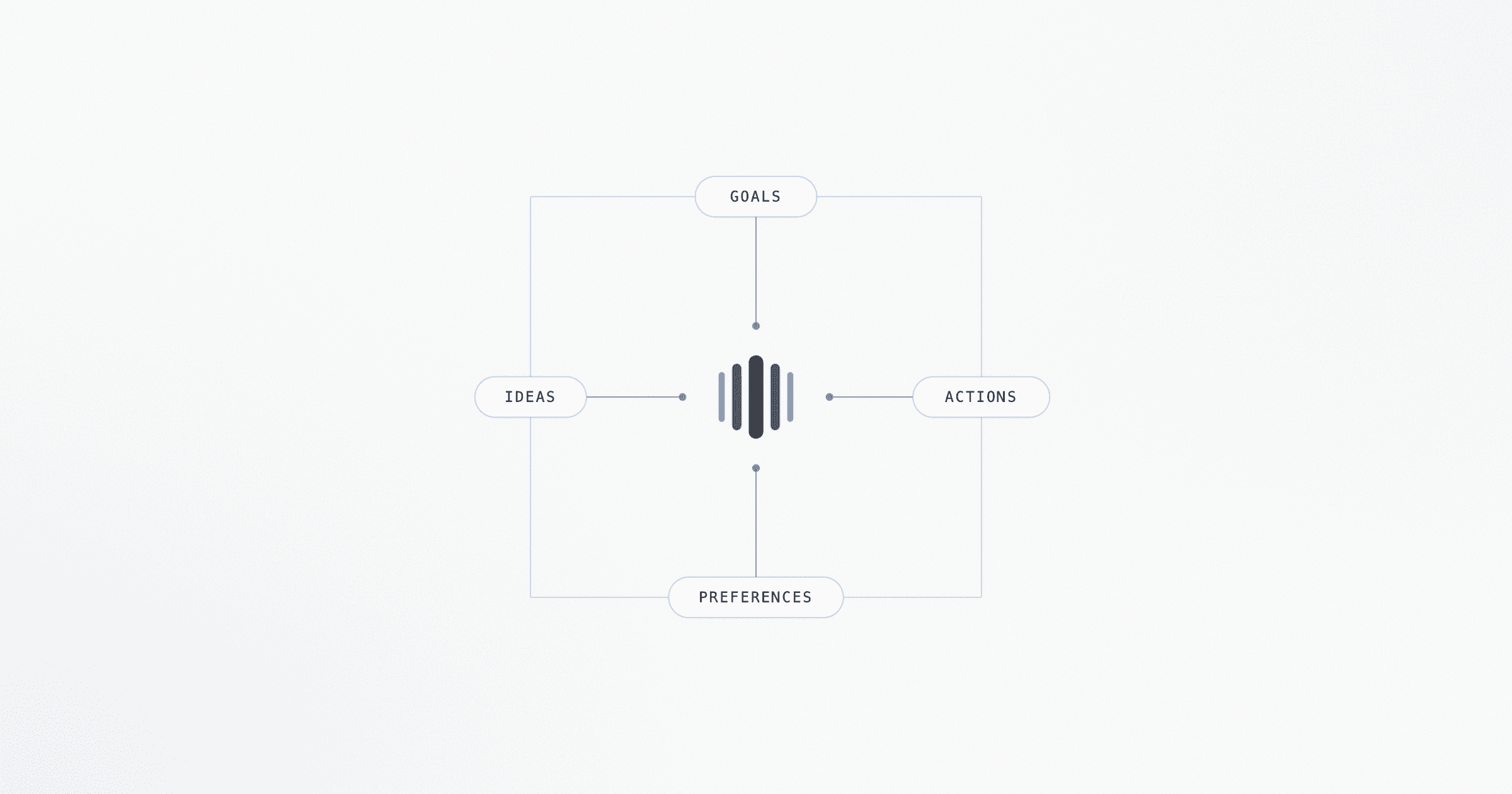
Existing AI works in isolated, personal environments. The difference is like a life coach versus a preacher. A life coach works one-by-one; clients don't interact through the coach. A preacher serves the whole congregation at once; people can still talk one-on-one, but the focus is the group's shared interests. These other AI systems are the life coach. Axamy is the preacher. Crucial to collaborative AI is true human-like understanding of people and the organization: the ability to read the room, resolve disagreements, and learn through native interaction rather than just scraping existing data.
People often ask, "are you saying that my Axamy will go and talk to my colleague's Axamy?" No, because there's just one Axamy. Your chats are yours, but everyone on the team is already talking to the same Axamy. Axamy isn't used to the exclusion of other great AI tools. Actually, by solving bureaucracy, we create a workplace with readiness for disruption with much less pain.
Where We Start
Bureaucracy has been with us for centuries. Dismantling it will take years of careful strategy. Right now, our focus is on growing businesses of around 10 to 500 people with early-onset bureaucracy. These might be companies still run by the founder, expanding beyond what they can manage alone. They don't have the problem we're trying to solve, but they're about to.
Axamy Today
Think of Axamy today as something like Notion or Asana, only much smarter and lighter, without the button-clicking or busywork. Everything happens automatically, or through a group chat with Axamy and others on the same task.
Bring Axamy an idea, problem, or objective. It selects the right people and tools, assigns work, follows up, and adjusts as circumstances change. For individual work it shows you exactly where you're needed and runs short daily or weekly check-ins. My favorite: ask Axamy to gather information from the team. It has a quick conversation with everyone individually and synthesizes the results for you.